

How to Build a Strong Brand Identity for Your Business: A Practical, Step‑by‑Step Brand Identity Strategy
A strong brand identity is the mix of visual, verbal, and experiential cues that help the right customers recognize, trust, and choose your business. This guide defines what brand identity is, shows how its elements work together to shape perception and revenue, and lays out a step‑by‑step framework you can use for small and mid‑size businesses. Many organizations lose momentum to mixed messages, unclear positioning, and scattered visuals—problems a cohesive identity fixes by aligning purpose, audience insight, and creative execution. Ahead you’ll find the essential identity elements, a practical brand strategy process, how to create usable brand guidelines, the business upsides of consistency, ways to measure and evolve your identity, plus real examples showing how focused creative work turns into measurable client growth. Throughout, we lean on proven approaches—purpose statements, storytelling frameworks, and visual identity systems—to help you build an authentic brand plan that drives visibility and growth.
What Are the Essential Elements of a Strong Brand Identity?
Brand identity is a coordinated system—visual identity, brand voice, story, and governance—that shapes how people recognize and respond to your business. Each piece plays a clear role: visuals cue recognition and mood, voice and narrative build emotional connection, and guidelines keep application consistent across channels. When you combine a thoughtful logo, color palette, typography, imagery, tone of voice, and a crisp brand story, you create coherence that supports recall, trust, and distinct positioning. Knowing how these elements relate makes it possible to build identity packages that actually work for marketing and customer experience.
The next section breaks down the visual building blocks—logo, color, type, and imagery—and how to choose them for small businesses.
Which Visual Identity Components Define Your Brand?
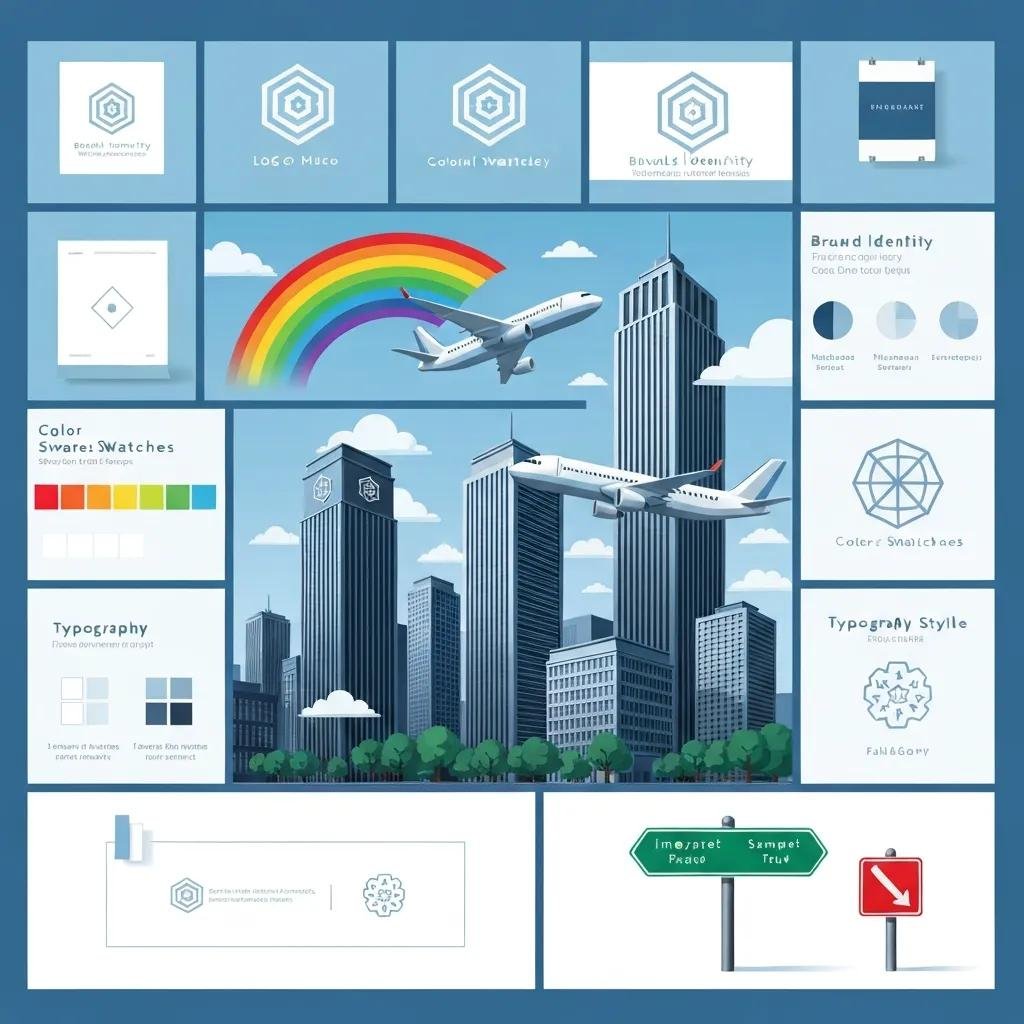
Your visual identity is made up of the logo, color palette, typography, and imagery style—the combined look and feel people attach to your organization. The logo is your primary recognition device (symbol, wordmark, or combination); choose the format that fits your name recognition and real‑world uses. Color choices tap into psychology to signal trust, energy, or calm—pick primary and supporting colors and document when each should be used in digital and print. Typography pairs legibility with character: a neutral workhorse for body copy plus a distinctive display face for headlines is a reliable approach. Consistent photographic or illustration treatment ties the system together and reinforces your brand story at every touchpoint.
Those visual choices feed directly into your verbal identity—how you speak and the stories you tell—so the next section focuses on voice and personality.ABefore we jump to a comparison of visual vs. verbal roles, keep these visual selection checkpoints in mind:
- Confirm the logo scales and remains legible at small sizes.
- Limit the palette to 3–5 colors and define clear usage rules.
- Choose type families with web and print variants plus reliable fallbacks.
With those checks in place you’re ready to pair visuals with a coherent brand voice and messaging system.
Intro to table: The table below lines up key visual components with verbal identity elements so you can see each part’s role and best applications.
This side‑by‑side view clarifies how visual and verbal parts combine into an identity people recognize and remember. Next, we’ll explore brand voice, archetypes, and micro‑copy examples that keep messaging consistent across channels.
How Do Brand Voice and Personality Shape Your Brand’s Perception?
Brand voice is the consistent set of language choices and attitude you use to communicate; tone adjusts that voice for context. Together they determine how people emotionally relate to your brand. Mapping personality archetypes—like Caregiver, Creator, or Sage—helps you prioritize word choices, sentence rhythm, and content types that match your purpose and audience. Practical voice guidelines include example headlines, tagline formulas, and social templates that preserve personality while allowing situational tone shifts. Micro‑copy examples (an upbeat CTA, an empathetic support reply, a confident product blurb) make rules actionable. Keeping a reference library of approved phrases and “dos and don’ts” reduces fragmentation across teams and vendors and reinforces a single brand memory over time.
Clear voice rules naturally lead into a strategic brand plan that aligns purpose, audience, and positioning.
How Do You Develop a Brand Strategy for Small Businesses?
Building a brand strategy for a small business means defining purpose and positioning, researching your audience, benchmarking competitors, and setting measurable objectives that match your budget and timeline. A practical strategy ties brand purpose to real customer problems and outlines prioritized initiatives—visual refresh, messaging overhaul, or a website relaunch—sequenced for visible impact. Research can scale from lightweight surveys and analytics reviews to stakeholder workshops that surface core values and customer language; these inputs feed a concise brand brief that guides creative work. A focused strategy balances aspiration with operational constraints so small teams can execute and measure results.
Below is a compact step‑by‑step checklist you can follow to build a small‑business brand strategy.
- Define purpose, vision, and core values with short statements that guide decisions.
- Research your audience via analytics, interviews, and simple surveys to form personas.
- Analyze competitors to find differentiation opportunities and positioning gaps.
- Create a focused brand brief and prioritize a 90‑day roadmap for visible impact.
That process sets you up to draft concrete purpose and value statements, which we cover next.
How Can You Define Your Brand Purpose, Vision, and Core Values?
Start with focused prompts that translate business intent into customer‑centered language: purpose answers why you exist, vision describes where you’re headed, and values show how you behave. Use templates like “We exist to [impact] for [audience] by [approach]” to draft purpose statements, then run quick stakeholder sessions to refine them. Pick 3–5 core values and attach observable behaviors or decisions to each so values are actionable in hiring, customer service, and marketing. A compact purpose and clear values become your north star for storytelling and design choices and simplify trade‑off decisions when prioritizing brand work.
These foundational statements then inform audience segmentation and persona work, which determine tone and channel choices.
Where helpful, map your strategy into a framework — for example, Bloom Design ME’s Visibility Boost Blueprint is a methodology that prioritizes visibility‑driving activities to multiply client acquisition. Mentioning that framework shows how agencies turn research and purpose into measurable growth tactics before we dive deeper into audience research.
Why Is Understanding Your Target Audience Critical for Brand Success?
Knowing your target audience ensures messaging, visuals, and channel choices connect with the people most likely to convert and advocate for your brand. Audience research can be quick and high‑impact: analyze website behavior, review top content, run short customer interviews, and use social listening to spot tone and needs. Build 1–2 prioritized personas capturing goals, barriers, preferred channels, and decision triggers to guide content and campaigns; prioritize segments by revenue potential and ease of reach. With a clear audience profile you can write targeted narratives, choose imagery that resonates, and run low‑cost tests to validate positioning before committing to larger investments.
Understanding audience and positioning naturally leads to creating usable brand guidelines to protect consistency across touchpoints.
What Are the Steps to Create Effective Brand Guidelines?

Effective brand guidelines turn strategy into practical rules and ready assets teams can use. A strong guideline balances clarity with usability: include logo usage, color specs, typography rules, imagery direction, voice and tone examples, and templates for common channels. Offer a lightweight one‑pager for day‑to‑day teams and a full master handbook for designers and partners. Rollout should cover asset storage, version control, training sessions, and a named owner to answer questions and enforce standards.
The table below shows guideline sections, included items, and example deliverables to make a guidelines build tangible for SMBs.
Clear, organized guidelines reduce rework and help teams deliver consistent work. The next section covers building the guideline and governance practices that keep it alive.
How Do You Build Comprehensive Brand Guidelines for Consistency?
Scope the guideline to your team’s needs—decide whether a quick reference plus an asset kit will do or if you need a full handbook for external vendors. Draft a sample table of contents, gather raw assets, and document concrete rules (logo clearspace, unacceptable uses, color values, typographic hierarchy) that prevent common mistakes. Assign version control and an owner for updates, and include an assets index with file‑naming conventions to simplify retrieval. Pilot the guideline on one campaign, gather feedback, and iterate so the rules are practical and adopted rather than just prescriptive.
A methodical approach to documenting brand elements is essential for keeping your brand consistent and recognizable.
Developing and Managing Brand Identities through Brand Guidelines
Organizations invest meaningful resources in building brand identities because these are important intangible assets. Given that role, strategic management of brand identity matters. While much existing research is theoretical, this paper offers practical guidance on brand guidelines—their benefits, contents, and users—and suggests directions for future study. Brand managers, especially those at smaller organizations without documented guidelines or larger brands looking to systematize their brand architecture, will find this work useful.
Brand guideline, E Mogaji, 2019
How Can You Ensure Brand Consistency Across All Marketing Channels?
Consistency needs governance, training, and channel‑specific templates so teams can produce on‑brand content quickly. Create a simple QA checklist for content that covers visual, verbal, and technical items: logo usage, color contrast, tone alignment, and URL/CTA accuracy. Build an asset library with clear metadata and permissions, run short training sessions to socialize updates, and assign a brand steward to approve external creative. Regular audits and a feedback loop catch drift early so your brand stays differentiated and trusted.
What Are the Benefits of a Cohesive Brand Identity for Your Business?
A cohesive brand identity boosts recognition, builds trust, and creates conditions for premium pricing and longer customer lifecycles by reducing friction and improving conversion across touchpoints. When visuals match voice and messaging stays consistent, customers process signals faster, remember your brand more easily, and develop emotional preference. Those intangible gains show up as measurable results: higher referral rates, better conversion from the same traffic, and stronger retention when customers feel understood. For small and mid‑size businesses, the ROI often appears as multiplied client acquisition from existing marketing spend and longer relationships.
Below are specific benefits to expect when identity work is done well.
- Improved Recognition: Consistent visuals and messaging increase recall across channels.
- Stronger Trust: A clear, professional identity lowers perceived risk for buyers.
- Higher Conversion: Cohesive presentation boosts the impact of marketing efforts.
- Differentiation: A distinctive voice and look set you apart from typical competitors.
Next, we tie these benefits to measurable metrics so you can evaluate brand investments.
How Does a Strong Brand Identity Increase Customer Loyalty and Revenue?
A strong brand reduces cognitive friction at moments of purchase and gives customers reasons to come back—driving loyalty and lifetime value. Customers who connect with your brand’s purpose and values are more likely to repurchase and recommend. Consistent identity also smooths onboarding and support interactions, leading to better experiences, positive reviews, and referrals. Typical outcomes include higher repeat purchase rates, increased average order value when brands command premium pricing, and improved conversion from content as trust grows. Tracking these changes against baseline metrics helps you link branding work to revenue and client acquisition improvements.
With benefits mapped to metrics, the next topic explains why consistency creates differentiation and how to protect that advantage.
Why Does Brand Consistency Lead to Market Differentiation?
Consistent presentation builds a distinct memory structure in customers’ minds, making your brand easier to recall than inconsistent competitors. Differentiation comes from the persistent combination of experience, voice, and purpose—something rivals find hard to copy. To protect that advantage, document your unique value propositions, consider trademark protection where appropriate, and keep iterating marketing to reinforce signature cues. Strong application rules and governance prevent dilution so your brand stays recognizable even as markets change.
Next we’ll cover how to measure and evolve your identity over time to sustain those gains.
How Do You Measure and Evolve Your Brand Identity Over Time?
Measuring and evolving brand identity uses a mix of awareness, sentiment, engagement, and conversion metrics plus a regular audit cadence to decide when to refresh or scale assets. Track search impressions and branded search volume for reach, social mentions and sentiment for perception, and conversion and lead metrics for commercial impact. Periodic brand audits—asset reviews, message testing, stakeholder feedback—reveal misalignments and opportunities. Use A/B tests and phased rollouts to reduce risk during updates. A clear measurement framework ties creative changes to business KPIs and creates a repeatable process for evolution.
The table below maps key metrics to what they measure and how to interpret them for brand decisions.
These metrics form a feedback loop for iterative brand improvements and guide decisions about refresh timing and scope. The following subsection lists primary KPIs and measurement methods.
What Key Metrics Should You Track to Evaluate Brand Success?
Key KPIs include awareness (search impressions, branded search trends), sentiment (reviews, social listening), engagement (time on site, repeat visits), and commercial outcomes (lead volume, conversion rate, retention). Use analytics platforms, Search Console, and simple NPS or CSAT surveys to collect baseline scores and track changes after brand initiatives. Map each metric to an action: awareness dips may require amplification, sentiment decline needs message adjustments, and conversion stagnation points to experience or messaging gaps. Review these KPIs in monthly or quarterly brand audits to keep creative work aligned with business goals.
These insights inform when and how to adapt identity elements, which we cover next with low‑risk testing and phased evolution.
How Can You Adapt Your Brand Identity to Changing Market Trends?
Adaptation should be evidence‑driven and incremental: run A/B tests for visual or messaging changes, pilot updates in a single channel or market, and gather quantitative and qualitative feedback before a full rollout. Triggers for change include audience shifts, stagnant performance, or competitive moves that alter category expectations. Preserve brand equity by keeping core assets—logo cues or signature voice elements—while modernizing supporting visuals or language. Communicate updates internally and provide refreshed templates and training so new elements are adopted consistently.
With measurement and evolution defined, the next section illustrates local results from Bloom Design ME’s work with Florida organizations.
How Has Bloom Design ME Helped Florida Businesses Build Strong Brand Identities?
Bloom Design ME is a digital marketing and creative agency in Orlando that helps small and mid‑size businesses, experienced entrepreneurs, foundations, and non‑profits across Florida build brand identities that drive client acquisition. Their branding service focuses on defining a brand’s core—purpose, voice, and visual system—and translating that work into deliverables like logo systems, color palettes, typographic rules, and brand guideline templates. Bloom Design ME centers strategy on measurable outcomes and uses a Visibility Boost Blueprint to prioritize visibility activities that have historically multiplied client acquisition by 2–5×. For organizations wanting a quick check, they offer a Free Visibility Health Audit valued at $367 to surface immediate discoverability and conversion opportunities.
The subsection below summarizes anonymized case snapshots that show the typical transformation process and results to expect.
What Are Real Examples of Successful Brand Identity Transformations?
Our anonymized case snapshots follow a familiar pattern: clients arrive with unclear positioning and inconsistent visuals; Bloom Design ME runs a focused brand strategy and redesign; and the result is stronger visibility and better lead quality. For example, a local service provider moved from fragmented messaging to a clear, purpose‑driven narrative and refreshed visual system, which improved website conversion and inbound leads. A nonprofit refined audience segmentation and storytelling, increasing engagement and donation conversions across email and social. These examples show how strategic identity work, paired with tactical visibility efforts, creates measurable outcomes that justify the investment.
Visual identity has outsized influence on perception—research on destination branding highlights how name, slogan, and logo shape public views.
Components of Visual Identity for Business Success
In modern communication landscapes, visual identity strongly influences the success of tourist destinations. This study examines the key components—name, slogan, and logo—and shows how respondents perceive each element in the case of Croatia. Findings indicate the logo is the most influential, followed by the name and the slogan. The paper also notes gaps in some economies’ understanding of visual identity’s role in marketing objectives.
Visual identity components of tourist destination, P Barišić, 2014
If you’re ready to begin, the next section explains how to book an initial consultation and what to expect from Bloom Design ME’s process.
How Can You Book a Branding Consultation to Start Your Brand Identity Journey?
Getting started is consultative: expect a diagnostic audit, a discussion of goals, and a review of current assets. That initial phase clarifies scope and outcomes and includes the Free Visibility Health Audit valued at $367. The consultation outlines likely deliverables—brand brief, visual identity package, guideline documents, and rollout templates—and a recommended phased timeline based on priority and budget. Bloom Design ME emphasizes measurable client acquisition outcomes and provides governance and templates so internal teams and external partners can implement consistently. Typical booking steps include a short intake, scheduling a discovery workshop, and agreeing on a scoped proposal to move into strategy and design.
This practical, outcome‑focused path gives you a clear roadmap for building and sustaining a strong brand identity for your business.
Frequently Asked Questions
What is the difference between brand identity and brand image?
Brand identity is what you create on purpose—logos, colors, messaging and the systems you use to present them. Brand image is how the public actually perceives those signals, shaped by customer experience and interactions. You control identity; image is earned. A strong identity makes a positive image more likely, but consistent delivery and engagement are required to close the gap.
How often should a business update its brand identity?
Brand updates should be strategic. A refresh every 5 to 10 years is common, but you may need to act sooner for major shifts—new target audiences, a product pivot, or competitive pressure. Use regular audits of performance and perception to decide timing. When you update, keep core recognition cues so you don’t lose hard‑won brand equity.
What role does storytelling play in brand identity?
Storytelling links your purpose and values to customer needs, creating emotional connection and meaning. A clear, well‑told brand story differentiates you in a crowded market and makes your work memorable. When done right, storytelling grows loyalty and advocacy because people support brands that reflect their values and experiences.
How can small businesses measure the effectiveness of their brand identity?
Small businesses can track awareness, engagement, and conversion to measure identity effectiveness. Use surveys, social analytics, and website data to see recognition and sentiment. Track customer feedback and run periodic brand audits to spot gaps. These inputs help you refine messaging and prioritize identity work that moves business metrics.
What are some common mistakes to avoid when developing a brand identity?
Common pitfalls include inconsistent application across channels, skipping audience research, and not defining a clear purpose. Inconsistency confuses customers and dilutes recognition; lack of audience insight leads to misaligned work; chasing trends without alignment to values hurts authenticity. A research‑backed, consistent approach avoids these traps.
How can a business ensure its brand identity remains relevant over time?
Keep your brand relevant by regularly assessing market trends, customer feedback, and competitor moves. Solicit customer input through surveys and conversations, and be willing to evolve your supporting elements while holding core values steady. Periodic audits and targeted updates help your identity reflect growth and changing audience needs.