

Leveraging Video Marketing to Grow Your Business and Deepen Brand Engagement
Video turns stories into results. By pairing strong creative with platform-aware formats and technical SEO, businesses move people from passive viewers to engaged prospects and measurable revenue. This guide breaks down how video fuels growth across awareness, engagement, and conversion stages, and gives practical steps for planning, production, distribution, and measurement. You’ll learn which video types match specific goals, how to set clear targets, how to measure ROI with the right KPIs and tools, local tactics for Florida businesses, and an agency-tested approach to creating and ranking videos for maximum visibility.
What Is Video Marketing and Why Is It Essential for Brand Growth?
Video marketing is the strategic use of short- and long-form video across channels to boost visibility, deepen audience connection, and drive conversions. It combines storytelling, visual cues, and targeted distribution to capture attention fast and guide viewers through awareness, consideration, and purchase. Consumers increasingly turn to video to learn about products, and search engines favor video-rich results — making video a must-have for SEO-led growth. Understanding these mechanics helps you pick formats, craft hooks, and set measurable goals for steady momentum.
How Does Video Marketing Drive Business Growth and Engagement?
Video turns attention into action by guiding viewers along a clear funnel: reach-focused content for awareness, educational or testimonial pieces for consideration, and demos or strong CTAs for conversion. Visual storytelling builds trust and social proof, reducing friction in buying decisions. Embedded videos also increase time on site and strengthen SEO signals, which can improve organic rankings and referral traffic. Success depends on aligned messaging, consistent CTAs, and remarketing that re-engages viewers who showed intent.
What Are the Key Statistics Showing Video Marketing’s Impact?
Recent research shows video lifts conversion rates, boosts organic visibility, and raises engagement across platforms. Pages with video often have longer sessions and higher click-through rates. Short-form formats like Reels and Shorts drive quick discovery and engagement; long-form content on YouTube and websites supports SEO and deeper education. Track watch time, completion rate, and conversion lift to quantify results and prioritize the formats that deliver the best returns. Those metrics justify investing in a balanced mix of short- and long-form video that supports both awareness and direct response.
What Are the Top Video Marketing Strategies to Boost Brand Engagement?

High-performing video programs pair audience research, goal-led planning, production that favors clarity over flash, and distribution optimized for each platform. Start by mapping audience segments and matching formats to each buyer stage, then build a calendar that blends evergreen, timely, and repurposed content. Production should prioritize a sharp hook, simple messaging, and captions to improve retention. Finally, optimize metadata and deploy a distribution mix that includes organic posting, paid amplification, and email integration to extend reach and drive conversions.
How Do You Define Your Audience and Set Video Marketing Goals?
Define your audience with personas that capture demographics, content habits, and pain points — those insights guide platform choice and creative tone. Set SMART goals tied to KPIs, for example: increase view-through rate by 15% or generate 30 qualified leads each month. Use existing analytics to prioritize segments with the highest engagement or conversion potential, then A/B test messaging to refine targeting. Clear goals make production and distribution decisions more efficient and measurable.
Which Video Types Best Enhance Brand Engagement and Lead Generation?
Match video types to business goals and platform behavior. The short table below lays out common formats, their typical objectives, recommended lengths, and where they perform best to help you prioritize production.
Intro: This table compares video types by primary goal, typical length, and recommended platform for clarity when planning content.
Summary: Mapping formats to goals and platforms helps you set realistic KPIs and prioritize what to produce first.
- Immediate engagement wins: arresting hooks, captioned clips, and CTA-focused end cards.
- Weigh production complexity against expected ROI when assigning budget across formats.
How Can Small Businesses in Florida Leverage Video Marketing for Growth?
Florida businesses can convert local relevance into a competitive edge by telling community stories, covering events, and using geo-targeted ads. Local content builds trust, strengthens local search signals, and opens partnership opportunities with nearby organizations. Cost-conscious teams should mix low-cost short-form social content with one or two higher-quality SEO-focused videos on their site or YouTube channel to capture search intent. Authentic local angles resonate across Orlando, Tampa, Miami, and beyond.
What Are Effective Video Marketing Tactics for Florida SMBs and Entrepreneurs?
Use a mix of tactics: capture event highlights to show community involvement, film customer testimonials for social proof, and run short-form ads to promote time-limited offers. Encourage user-generated content via local contests and partner with nearby organizations for cross-promotion. Run geo-targeted social placements and optimize titles and descriptions with city-specific keywords to boost local discoverability. These approaches offer affordable ways to drive both awareness and direct response in Florida markets.
- Local video ideas: event recaps, storefront tours, and staff introductions to humanize your brand.
- Short-form clips extend reach while longer, SEO-ready videos on your site and YouTube capture search intent.
- Partner-driven content leverages networks you already have and builds local trust.
How Do Local Case Studies Demonstrate Video Marketing Success in Florida?
Local case studies show clear outcomes: a community-focused explainer can lift web traffic and inbound leads, while a testimonial series can raise conversion rates for service businesses. Often a single high-quality video, combined with local paid promotion and email follow-up, produces measurable increases in organic traffic and qualified leads. The common threads are a clear CTA, local relevance, and consistent distribution — tactics other Florida SMBs can replicate.
How Do You Measure Video Marketing ROI and Audience Engagement?
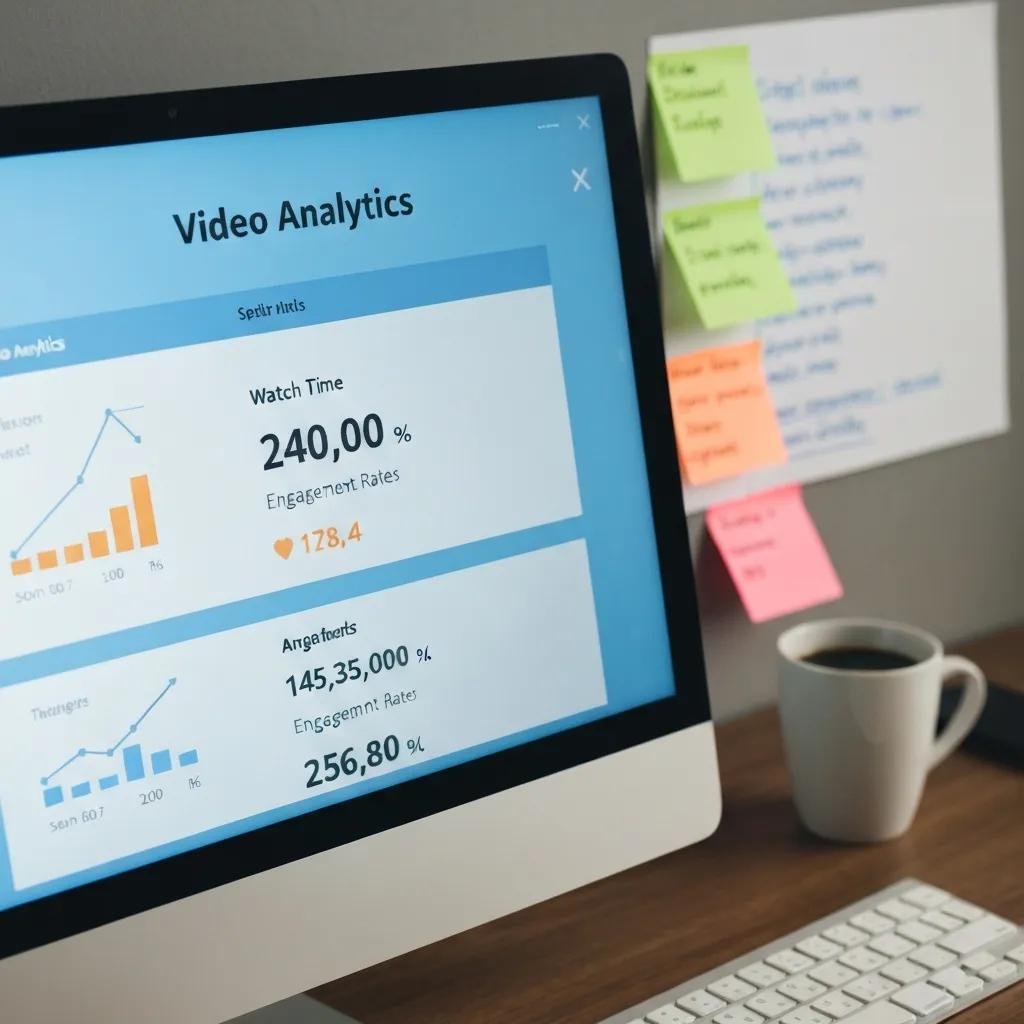
Measuring ROI means tracking the right KPIs, linking platform metrics to your site analytics, and using attribution that reflects multi-step purchase paths. Key metrics are watch time, completion rate, CTR, and conversion rate — tied back to landing page behavior, leads, and revenue. Use UTM parameters and conversion events to follow video-driven traffic through the funnel and keep a regular reporting cadence to evaluate performance and guide investment.
What Key Metrics Indicate Video Marketing Success?
Core KPIs reveal both attention and business impact: watch time and completion rate show engagement quality, CTR measures CTA and thumbnail effectiveness, and conversion rate shows real value. High views with low completion usually signal a weak hook; strong watch time with low conversions suggests misaligned landing experiences. Benchmarks vary, but targeting completion rates above 50% for 2–3 minute videos and aiming for CTRs above your channel averages is a useful starting point.
Intro: The following table lists KPIs with measurement methods and practical benchmarks to guide reporting and optimization.
Summary: Regularly reviewing these KPIs helps you prioritize creative fixes, distribution shifts, and landing page improvements to lift ROI.
Which Tools Help Analyze Video Campaign Effectiveness?
Start with native platform analytics (YouTube Studio, social insights) for viewer behavior, then integrate those signals into GA4 or server-side analytics to track downstream conversions. Use UTM tagging, event tracking, and audience lists for precise attribution and remarketing. Third-party dashboards can consolidate cross-channel data for executive reporting and ROI modeling. Combining platform and web analytics turns engagement signals into business outcomes and informs where to allocate budget.
- Recommended tools: platform native analytics, GA4 for cross-channel attribution, and a reporting dashboard for consolidated views.
- Use UTM parameters and event-based conversion tracking to connect views to revenue.
- Hold monthly performance reviews to act on trends and iterate campaigns.
How Does Bloom Design ME’s Video Marketing Approach Drive Brand Growth?
We blend local market insight, creative production, and video SEO to help small and mid-size businesses increase visibility and generate leads. Our core service is Video Marketing — "Grab attention, tell stories and sell using videos. We'll help you create and rank them." We serve clients across Florida and use a structured Visibility Boost Blueprint plus a Free Visibility Health Audit to prioritize opportunities and measure impact. The goal: show expertise in digital marketing and creative services and guide businesses to book a consult or request a quote.
What Is the “Visibility Boost Blueprint” and How Does It Multiply Results?
The Visibility Boost Blueprint is a phased process that aligns strategy, production, optimization, and measurement to improve discoverability and conversions. It starts with audience and keyword-driven planning, moves to focused production and SEO-ready editing, and ends with distribution and iterative optimization based on analytics. Bloom Design ME positions the Blueprint to deliver typical visibility and traffic gains in the 2–5x range by combining production best practices with VideoObject schema, optimized metadata, and distribution amplification. The result is videos that rank and convert plus a repeatable playbook for steady growth.
Intro: The following table summarizes core service components, deliverables, and what clients can expect in outcomes.
Summary: This table shows how each offering maps to deliverables and expected outcomes so clients know what to expect.
How Does the Free Visibility Health Audit Help Optimize Video Strategies?
Our Free Visibility Health Audit reviews video visibility, keyword and SEO gaps, distribution weaknesses, and quick technical fixes, then delivers a prioritized action plan. Valued at $367, the audit highlights immediate wins — like schema implementation, transcript optimization, and thumbnail tests — plus medium-term content and paid amplification opportunities. Clients get a clear list of next steps and recommended investments to increase reach and conversions. Request the audit as a diagnostic to inform a broader video strategy.
What Are the Best Practices for Creating and Optimizing Videos for SEO and Engagement?
Best practices marry creative hooks, technical SEO, and disciplined distribution so videos get seen and drive conversions. Lead with a strong 3–10 second hook, keep messaging tight, and include captions to improve retention in silent autoplay environments. On the technical side, optimize titles, descriptions, chapters, and transcripts; add VideoObject schema where possible; and test thumbnails to boost CTR. Repurpose long-form content into short clips, email embeds, and paid placements to create multiple conversion touchpoints.
How Do You Optimize Videos for Google and Social Media Platforms?
Platform optimization focuses on the signals each channel values: watch time and relevance on YouTube, and native engagement on short-form apps. For YouTube, use keyword-led titles, detailed descriptions with timestamps, compelling thumbnails, and chapters to help viewers and search engines. For Instagram and TikTok, upload natively, open with a bold visual hook, add captions, and lean into trending formats and sounds. On your website, include transcripts, schema markup, and video-rich landing pages to capture search traffic and improve on-site engagement.
What Are Effective Multi-Channel Distribution and Promotion Strategies?
Repurpose a flagship long-form video into bite-sized clips, social posts, and email highlights to cover the buyer journey. Use organic posts for awareness, paid ads to target high-value segments, and retargeting to convert engaged viewers. Budget-smart tactics include prioritizing one SEO-focused hero video, repurposing it into several short clips, testing messaging with a modest paid budget, then scaling what works. A layered approach keeps messaging consistent across owned, earned, and paid touchpoints and maximizes ROI.
- Repurpose long-form videos into 15–60 second clips for social and email teasers.
- Use paid amplification selectively for high-intent offers and to jumpstart visibility.
- Implement retargeting sequences that move engaged viewers toward conversion actions.
To book a consultation or request a quote, reach out to Bloom Design ME to discuss a tailored video strategy, production plan, and measurement framework. We’ll help you turn video investment into measurable growth.
Frequently Asked Questions
What are the benefits of using video marketing for small businesses?
Video marketing raises brand visibility, strengthens customer engagement, and improves conversion rates. Video lets you tell your story and show products or services in a more relatable way than static content, which builds trust. It's also highly shareable, which can drive organic reach and more traffic to your website.
How can I create engaging video content on a budget?
You don’t need expensive gear to create effective videos. Start with a smartphone or a basic camera and focus on authentic storytelling. Use free or low-cost editing tools, repurpose existing content, and collaborate with local partners or influencers to add variety without a big spend. Planning and clarity beat overproduced content every time.
What role does SEO play in video marketing?
SEO helps your videos get found. Optimizing titles, descriptions, and tags with relevant keywords increases discoverability, and VideoObject schema can improve how videos appear in search results. Strong thumbnails and clear CTAs also help with click-throughs and retention, which feed back into search performance.
How can I measure the success of my video marketing campaigns?
Track KPIs like watch time, completion rate, CTR, and conversion rate. Use Google Analytics to connect video performance to website traffic and conversions. Engagement metrics — likes, shares, comments — tell you how content resonates. Regularly review these numbers and iterate based on what moves the needle.
What types of videos are most effective for brand engagement?
Explainer videos, testimonials, product demos, and behind-the-scenes content all work well. Explainers clarify value, testimonials build trust, demos drive conversions, and behind-the-scenes pieces humanize your brand. Mixing formats helps you reach audiences at different stages of their journey.
How often should I post video content to maintain engagement?
Consistency matters more than frequency. For many brands, posting weekly or bi-weekly is a good starting point. Focus on quality: a useful, well-made video posted regularly will outperform a higher quantity of low-value content. Use your analytics to refine cadence over time.