
Maximize ROI with Expert PPC: Practical, Proven Strategies for Paid Advertising
PPC connects intent-driven customers with tailored offers at the exact moment they’re searching or scrolling—and when it’s done right, it delivers measurable return on ad spend. This guide lays out repeatable, practical tactics to lift ROI across paid campaigns. You’ll get a clear view of what PPC management includes, how platform-specific playbooks (Google Ads, Meta, YouTube) turn clicks into customers, and which optimization workflows cut wasted spend while improving conversion rates and ROAS. We cover targeting and bidding mechanics, landing page alignment, creative testing, and agency-level playbooks that scale client acquisition for small and mid-size businesses. Common pain points—rising CPCs, murky attribution, and creative fatigue—are met with modern fixes like smart bidding, first‑party signals, and continuous CRO. Read on for checklists, decision tables, and step-by-step actions marketing owners and in‑house teams can use right away.
What Are PPC Management Services and How Do They Maximize ROI?

PPC management wraps campaign setup, ongoing optimization, creative testing, bid strategy, and measurement into a single workflow that aligns ad spend with business outcomes. The goal is simple: match audience intent to relevant ads, automate bids toward conversion goals, and cut underperforming keywords or placements to reduce waste. Continuous testing—of creative and landing pages—raises CTR and conversion rates, which improves quality scores and lowers effective cost per acquisition. With reliable conversion tracking and analytics in place, teams can move budget to top performers and scale predictable acquisition.
PPC management improves efficiency through precise audience targeting and smart budget allocation:
- Targeting precision: Serve ads to high‑intent queries and verified audience signals to reduce irrelevant clicks.
- Bid allocation: Apply bid modifiers and device/location adjustments to favor profitable segments.
- Negative keyword hygiene: Remove non‑converting terms so spend isn’t wasted.
Together these practices boost ROAS and create a reinvestment loop for top tactics. For example, Bloom Design ME’s Paid Ads approach centers on a Visibility Boost Blueprint: continuous optimization and tailored strategies that protect ad spend efficiency.
How Does Expert PPC Management Improve Ad Spend Efficiency?
Expert management reduces wasted spend by using intent segmentation, negative keyword lists, and audience exclusions to block low‑value traffic before bids are placed. Managers shift budgets to campaigns, keywords, and dayparts that historically convert, and let bid automation run with clear guardrails so scaling doesn’t mean overspending. Regular A/B tests remove weak ads and landing pages, which lifts CTR and quality score and lowers CPC over time. That cycle of pruning and signal‑driven bidding produces measurable improvements in cost per acquisition and creates dependable paths for scaling into new audiences.
Which Platforms Are Best for ROI‑Focused PPC Campaigns?
Platform choice depends on conversion intent, sales cycle, and product type. Search channels capture high‑intent buyers; social channels extend reach, drive consideration, and power remarketing.
Google Search and Google Shopping are top picks for direct‑response and e‑commerce thanks to strong purchase intent. Meta (Facebook/Instagram) and YouTube are better for building consideration and feeding search demand later in the funnel. Display and programmatic excel at retargeting and upper‑funnel reach when paired with accurate attribution. The key is cross‑platform attribution and consistent creative messaging so every channel contributes to overall ROAS rather than fragmenting budget.
Research supports the need to understand each platform’s performance characteristics when optimizing for ROI across channels.
Cross‑Platform PPC Performance: Google Ads vs. Social Media
This comparative study evaluates PPC performance across Google Ads and major social platforms (Facebook, Instagram, LinkedIn), measuring metrics like CTR, CPC, and ROAS from real campaigns. The analysis highlights where each channel drives the most value, the scenarios that favor search or social, and the role of factors such as audience targeting and bidding strategy in shaping outcomes.
Performance Insights from Cross‑Platform PPC Advertising: A Case Study on Google and Social Media Campaigns
How Does Google Ads Management Drive Client Acquisition for Small Businesses?
Google Ads drives client acquisition by prioritizing local intent keywords, using ad extensions, and aligning landing pages so small budgets capture high‑quality leads rather than broad, low‑value traffic. Proper conversion tracking—leveraging first‑party signals and platform tags—lets managers optimize toward meaningful actions instead of vanity metrics, improving budget pacing and bid decisions for small‑business goals. Smart bidding paired with focused keyword lists stretches limited budgets while keeping visibility on high‑value queries. Bloom Design ME’s Google Ads work focuses on results‑oriented setups and ongoing measurement to lift ROI for small businesses through disciplined structure and continuous optimization.
Below is a compact comparison of common Google Ads formats and the primary KPIs to watch when your goal is client acquisition.
What Are Key Google Ads Optimization Techniques for Higher ROI?
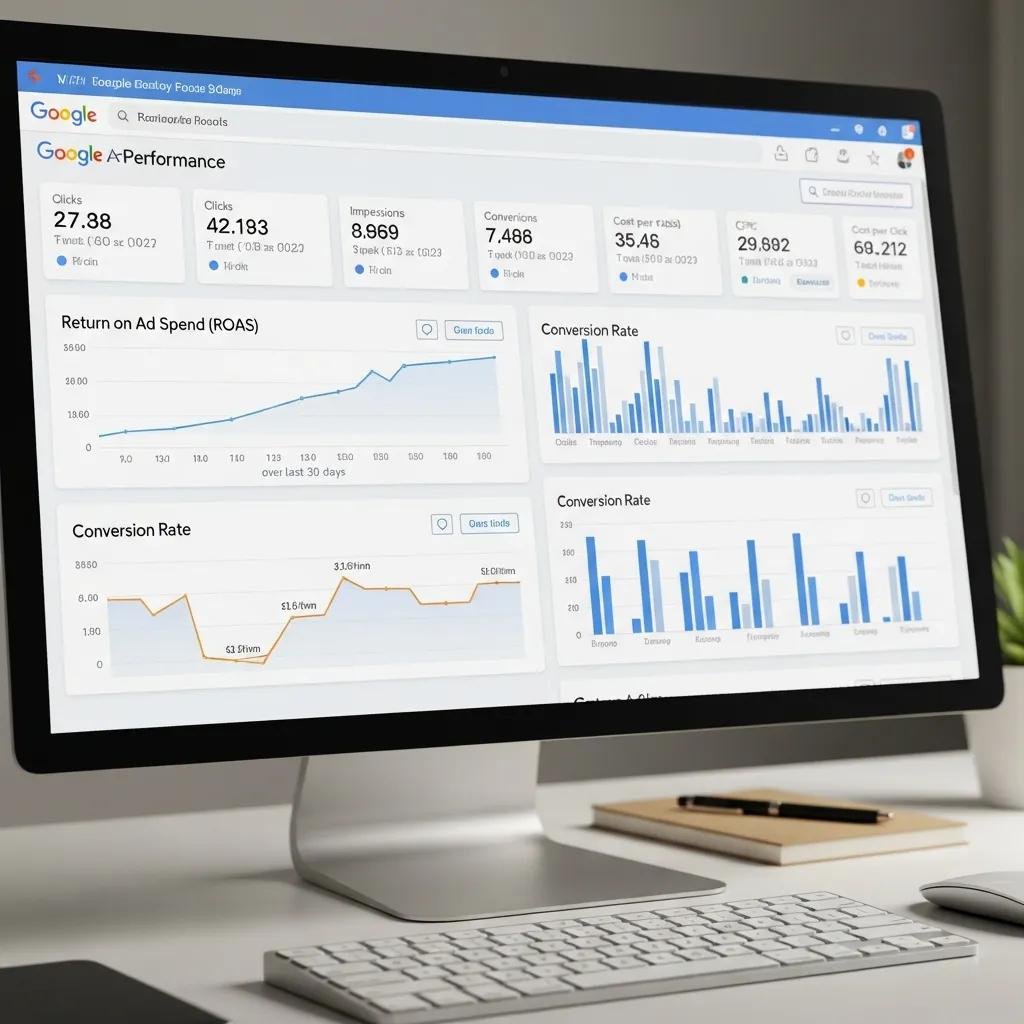
High‑impact tactics include smart bidding (target CPA, target ROAS) with conversion‑value tracking, adding ad extensions to increase real estate and CTR, and keeping strict negative keyword lists. Segment campaigns by intent and product/service to sharpen relevance and budget control, and feed the algorithm reliable audience signals—like in‑market and remarketing lists—so it finds likely converters. Run regular asset‑level A/B tests on headlines and descriptions to maintain ad quality, and monitor automation with conservative guardrails to prevent runaway spend while letting smart bidding use real‑time signals for efficiency.
A systematic review of Google Ads campaign quality identifies the core factors that drive performance and explains how to optimize them.
Google Ads Campaign Quality & Performance Optimization
This PRISMA‑based systematic review of 49 peer‑reviewed articles (2007–2024) examines how campaign quality affects Google Ads performance. It categorises key dimensions—ad relevance, CTR, landing page experience, conversion rate—and presents a practical framework linking those elements to outcomes, plus data‑driven optimisation tactics and the metrics marketers should track.
The relationship between campaign quality and performance in Google Ads: a systematic review, M Shemshaki, 2025
How Does Landing Page Optimization Enhance Google Ads Performance?
Landing page relevance raises Quality Score and conversion rate by matching ad messaging to user intent—this lowers CPC and increases ROI. Faster load times and a mobile‑first UX reduce bounce rates; clear, focused CTAs and visible trust signals increase form completions and calls. Use structured conversion tracking and small experiments to find layout and content changes that lift conversions, then scale winners. Consistent messaging from keyword to ad to landing page creates a seamless path that improves both conversion rate and cost efficiency.
Using tools like Google Suites can simplify landing page creation and measurement, helping turn visitors into leads or customers.
Google Suites for Landing Page Optimization & Conversions
This review looks at how Google Suites (Sites, Forms, Analytics, etc.) can support landing page creation and measurement. It outlines practical ways organizations can design, deploy, and analyze landing pages to improve customer experience, capture feedback, and measure performance—helpful for teams with limited resources who need fast, measurable results.
Improving customer service quality through the utilization of google suites in landing page creation, ME Purwanto, 2024
What Are Effective PPC Campaign Optimization Strategies for Paid Advertising Agencies?
Agencies use a repeatable playbook: deep keyword and audience research, clean account architecture, layered automation, and coordinated creative + landing page testing to drive conversion‑focused outcomes. This approach balances hands‑on oversight with automated bidding, ensuring smart bidding has the right signals and constraints. Agencies also fold CRO insights into ad tests so creative gains and landing page changes compound across clients. The agency playbook prioritises measurement hygiene, first‑party data, and continuous experimentation to protect and grow ROI.
Different optimization techniques fit different needs; the table below helps choose the right approach.
How Do Keyword Research and Smart Bidding Boost PPC Results?
Keyword research groups queries by intent and value, uncovering long‑tail terms that often convert at lower CPCs and tightening match types to cut irrelevant traffic. Pairing those intent‑driven groups with smart bidding gives machine learning clear signals to optimise for conversions and value, letting you scale without losing cost discipline. Agencies should apply guardrails—bid caps or CPA ranges—and watch algorithm behaviour to keep automation aligned with business goals. The combo of targeted keyword structure and disciplined smart bidding delivers efficient scale and steady ROAS gains.
Why Is Creative Ad Copywriting Essential for Conversion‑Focused PPC?
Creative decides whether an impression becomes a click—and if a click becomes a conversion. Strong messaging lifts CTR and primes visitors to convert on the landing page. Use simple frameworks (problem → benefit → CTA), rotate headline and description variants, and refresh assets regularly to avoid fatigue. Short videos and compact visuals work on social and display; search benefits from tightly aligned text ads that mirror query intent. Systematic creative testing plus performance measurement turns creative from a variable cost into a repeatable growth lever.
Why Choose ROI‑Focused PPC Services for Your Business Growth?
ROI‑focused PPC delivers predictable acquisition by aligning paid strategy to business metrics instead of clicks. Through discovery, a tailored strategy, disciplined launch, and continuous optimisation, these services protect and grow ROI. They emphasise clear measurement, ongoing experimentation, and channel‑mix choices that prioritise profitable growth. Tailored campaigns beat one‑size‑fits‑all setups because they match audiences, creative, and landing experience to specific conversion paths—reducing CPA and raising lifetime value. Agencies that limit client intake and give focused attention tend to onboard faster and iterate more effectively to drive results.
This table maps service elements to outcomes so decision‑makers can see how strategic choices affect the bottom line.
How Do Tailored PPC Solutions Increase Return on Investment?
Tailored PPC starts with your goals, then maps audiences and channel mix to prioritize budget toward the highest‑return segments. Personalising creative and landing pages for audience cohorts increases relevance and conversion rates, while budget allocation reflects seasonality and customer lifetime value. The iterative loop—discover, test, measure, scale—keeps campaigns aligned with market signals and business objectives. Treating PPC as a measurable acquisition engine rather than an isolated channel produces more predictable, higher‑value results.
What Benefits Do Small to Mid‑Size Businesses Gain From Expert PPC?
Expert PPC gives SMBs immediate visibility in front of ready buyers, a predictable lead flow, and the ability to scale without building large in‑house teams. Agencies bring specialised tools and proven playbooks that shorten learning curves and improve spend efficiency, enabling smaller budgets to compete with larger advertisers. With disciplined measurement and first‑party data, SMBs can iterate quickly and shift budget to the tactics that deliver the best ROI. The result: faster time‑to‑lead, clearer attribution, and more efficient budget use that supports sustainable growth.
When you’re ready to prioritise ROI and streamline client acquisition, Bloom Design ME offers Paid Ads expertise built on a Visibility Boost Blueprint, tailored execution, and a limited intake model for focused attention. Book a call to request a Visibility Health Audit and see how an ROI‑first PPC strategy can scale your acquisition.
Frequently Asked Questions
What is the difference between PPC and SEO in digital marketing?
PPC (Pay‑Per‑Click) and SEO (Search Engine Optimization) serve different purposes. PPC delivers immediate visibility by paying for placements on search engines and social platforms, while SEO improves organic rankings over time without per‑click costs. PPC is ideal for fast results and targeted campaigns; SEO builds longer‑term authority and sustainable traffic. Used together, they provide both immediate and lasting presence in search results.
How can I measure the success of my PPC campaigns?
Track KPIs like Click‑Through Rate (CTR), Cost‑Per‑Click (CPC), Conversion Rate, and Return on Ad Spend (ROAS). Use tools such as Google Analytics and platform dashboards to view behaviour and conversions. Set up conversion tracking so you can tie ads to meaningful actions—purchases, signups, calls—and review these metrics regularly to guide optimisations and budget shifts.
What role does audience targeting play in PPC advertising?
Audience targeting makes your spend more efficient by focusing ads on people most likely to convert. Use demographic, geographic, and behavioural signals to tailor messaging and bids. Remarketing and lookalike audiences refine reach further, helping you reconnect with interested users and reach similar prospects who are more likely to convert.
What are some common mistakes to avoid in PPC campaigns?
Common mistakes include skipping keyword research, not using negative keywords, and neglecting landing page alignment. These errors lead to irrelevant traffic and wasted spend. Other pitfalls are poor conversion tracking and failing to test creatives. Avoiding these mistakes lets you concentrate budget on what actually converts.
How often should I optimize my PPC campaigns?
Review campaigns at least weekly to monitor key metrics and make adjustments. Continuously run A/B tests on creatives and landing pages, and update keyword and bid strategies as performance data accumulates. Frequent, data‑driven tweaks keep your campaigns efficient and responsive to market changes.
Can PPC advertising benefit small businesses?
Absolutely. With a well‑structured PPC campaign, small businesses can get immediate visibility, target local or niche audiences, and control spend. PPC gives measurable results that can be optimised quickly, making it a cost‑effective channel for driving leads and sales even with limited budgets.