
Complete Guide to Conversion Rate Optimization: Strategies to Increase Website Conversions
Conversion Rate Optimization (CRO) is the systematic process of increasing the percentage of website visitors who take a desired action, such as completing a purchase, submitting a lead form, or signing up for a newsletter. By focusing on conversion funnel optimization, CRO turns existing traffic into measurable revenue or leads, improving marketing ROI without necessarily increasing ad spend. This guide explains what CRO is, the core metrics to track, and the step-by-step processes that drive repeatable improvements in conversion rate optimization for ecommerce, lead-gen, and nonprofit sites. You will learn practical UX and design techniques, A/B testing best practices, channel-specific strategies for SEO and paid ads, and how to apply analytics and AI to prioritize experiments. The article also outlines how a structured CRO process — from discovery to iterative testing — delivers results and how Florida small to mid-size businesses can apply localized tactics for maximum ROI. Throughout, we use conversion funnel analysis and real tactical advice to help you improve conversion rates and turn more visitors into customers or supporters.
This data-driven approach is crucial for businesses, especially in e-commerce, to significantly boost sales and profitability.
Data-Driven CRO for E-commerce Sales & Profitability
This paper explains the strategic data-driven approach for the improvement of business sales performance and conversion rates of e-commerce websites. This is a modern approach to collect key data metrics and implement cost-effective automation that helps in improving conversion rates and sales performance leading to increased profitability and revenue for business and high satisfaction of customer service.
Strategic data driven approach to improve conversion rates and sales performance of e-commerce websites, H Saleem, 2019
What is Conversion Rate Optimization and Why Does It Matter?
Conversion Rate Optimization (CRO) is the discipline of improving the percentage of visitors who complete a defined conversion action by optimizing page experience, messaging, and funnel flow. It matters because small percentage gains compound across traffic volumes to create substantial revenue or lead growth, making CRO one of the most cost-effective ways to improve marketing efficiency. CRO reduces cost-per-acquisition by increasing the value of existing traffic, improves user experience, and provides data-driven clarity on which changes drive business outcomes. The first step in CRO is defining goals, measuring baseline performance, and using analytics to prioritize where to test and iterate.
CRO delivers three core business benefits that justify investment and focus:
- Improved ROI: Optimizing conversion rate increases the value of every marketing dollar spent.
- Lower acquisition costs: Better conversion funnels reduce cost-per-lead or cost-per-sale without additional traffic.
- Scalable growth: Small, repeated lifts compound to produce significant, sustainable customer growth.
For businesses seeking expert help, Bloom Design ME offers a Free Visibility Health Audit and a tailored five-step digital marketing process known as the Visibility Boost Blueprint to help improve conversion and multiply their clients’ results 2-5x. This comprehensive approach integrates a full suite of services including strategic Marketing Plan development, impactful Branding, high-converting Website Design, robust SEO strategies, engaging Email Marketing, an innovative AI Receptionist for 24/7 lead capture, expertly crafted Content, strategic Outreach Campaigns, compelling Graphic Design, profitable Paid Ads, proactive Reputation & Google Review Management, and attention-grabbing Video Marketing.
Ready to Boost Your Conversions?
Discover how Bloom Design ME's comprehensive suite of services can transform your website performance and multiply your results. Get a Free Visibility Health Audit today!
Understanding CRO’s key metrics clarifies where to focus experiments and how to measure success.
How Do We Define CRO and Its Key Metrics?
Conversion Rate Optimization focuses on measurable actions and the metrics that quantify funnel performance. Conversion rate is calculated as conversions divided by sessions (or unique visitors) and expressed as a percentage, and related metrics such as click-through rate (CTR), bounce rate, and average session duration help explain why users convert or drop off. Macro conversions are primary business outcomes like purchases or qualified leads, while micro conversions include intermediary actions such as email signups or product video views that indicate intent and help predict macro outcomes. Establishing a measurement plan with clear event tracking for each conversion action ensures tests evaluate the right outcomes and guard against false positives.
Below is a quick reference comparing common conversion goals, the conversion action to track, and example KPIs to use during experiments:
This EAV-style comparison clarifies which metric aligns with each business objective and helps teams select meaningful primary and secondary KPIs for tests. Mapping goals up front accelerates hypothesis generation and keeps experiments focused on business impact.
What Are the Benefits of CRO for Your Business?
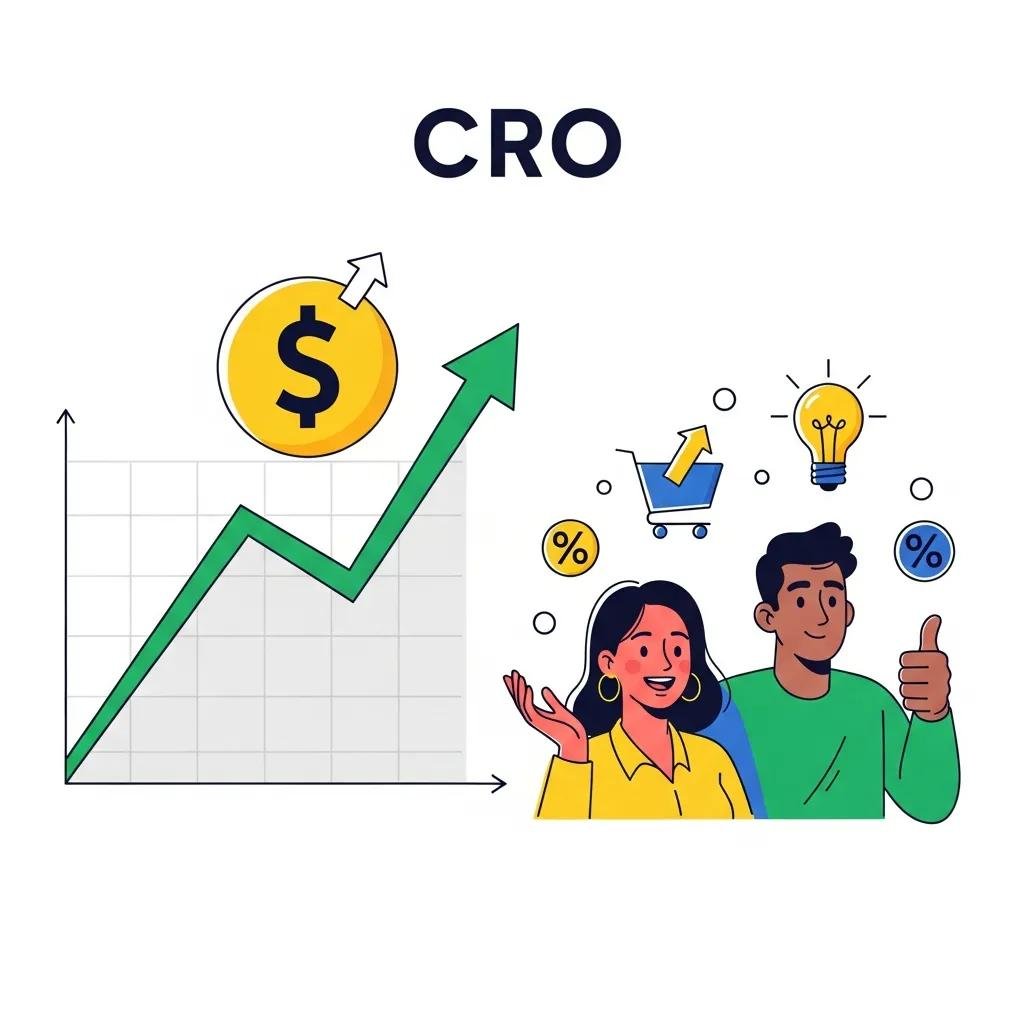
CRO improves business outcomes by increasing the efficiency of existing traffic and aligning user experience to buyer intent. The direct benefits include higher revenues from the same visitor base, lower customer acquisition costs, and improved lead quality because tests and segmentation often filter higher-intent audiences. CRO also strengthens competitive differentiation by improving site clarity, trust, and ease of purchase, which directly affects lifetime value and referral potential.
- Reduced acquisition costs: Better conversion rates lower CPA without increasing ad spend.
- Higher lead quality: Optimized funnels attract and convert more qualified prospects.
- Stronger scalability: Iterative testing compounds gains and creates a repeatable growth engine.
These benefits make CRO a strategic lever for growth marketing, and understanding them naturally leads into the next topic: how a structured CRO process translates analytics into high-impact experiments.
How Does the Bloom Design ME CRO Process Drive Results?
Bloom Design ME’s CRO approach maps discovery to measurable outcomes using a structured, repeatable process that blends analytics, UX design, and targeted experimentation, supported by a full spectrum of digital marketing services. The process centers on identifying high-impact pages, generating prioritized hypotheses from qualitative and quantitative data, designing valid experiments, and implementing winning variations with technical improvements. This integrated workflow coordinates essential services like strategic Marketing Plan development, impactful Branding, high-converting Website Design, robust SEO strategies, engaging Email Marketing, expertly crafted Content, compelling Graphic Design, profitable Paid Ads, and attention-grabbing Video Marketing to ensure acquisition channels and landing page experiences work together to maximize conversions. Using a standardized sequence of discovery, testing, and implementation — paired with the Visibility Boost Blueprint — turns insights into scalable conversion improvements.
The Bloom Design ME process follows practical steps to convert analysis into results:
- Discovery & Audit: This phase involves a comprehensive analytics review, user research, and a deep dive into your existing digital footprint. We assess your current Marketing Plan, analyze your Website Design for friction points, and evaluate your SEO performance to identify high-opportunity pages.
- Hypothesis Generation: From the audit, data-driven hypotheses are generated and prioritized by potential impact and ease of implementation. This often involves analyzing user behavior patterns, content engagement, and the effectiveness of current Email Marketing and Paid Ads campaigns.
- Test Design & Execution: A/B and personalization experiments are meticulously designed with clear success criteria and sample-size planning. This stage might involve creating new Graphic Design elements, refining Content messaging, or testing different Video Marketing approaches.
- Implementation & Scale: Winning variations are rolled into production, often requiring updates to your Website Design, alignment with SEO and Paid Ads messaging, and integration into Email Marketing sequences. We also ensure your AI Receptionist is updated with new conversion pathways.
- Iterate & Optimize: Results feed new hypotheses for continuous improvement, ensuring your Branding remains consistent and your Reputation & Google Review Management reflects positive customer experiences. This continuous loop ensures sustained growth and maximum ROI.
What Are the Steps in Our Proven CRO Process?
A practical CRO workflow begins with discovery and converges on prioritized tests that deliver measurable wins. Discovery includes analytics auditing (session analysis, funnel breakdowns, and conversion metrics), qualitative research (surveys, user interviews, session recordings), and technical performance checks. Hypothesis generation translates findings into testable statements such as “If we simplify the checkout form, then cart completion will increase,” and tests are prioritized using impact-effort matrices. Test design defines variant changes, target audience segments, statistical parameters, and success metrics, while implementation pairs front-end changes with tracking and post-test rollout plans.
Typical deliverables and cadence include a baseline audit report, a prioritized backlog of tests, test run documentation, and a rollout plan for winners, usually executed on biweekly to monthly cadences. Clear handoffs from analysts to designers and developers ensure tests are implemented correctly, and the iterative loop ensures learnings compound over time into persistent conversion gains.
How Do Hypothesis Generation and Testing Improve Conversions?
Hypotheses convert observed user behavior into focused experiments that validate which changes move key metrics. Hypotheses are sourced from analytics patterns (high drop-off pages), qualitative signals (confusing microcopy), and UX heuristics (unclear call-to-action hierarchy). A robust hypothesis statement includes the problem, proposed change, expected outcome, and the metric used to measure success, enabling teams to run controlled A/B tests against baseline behavior. Tests are valid only when sample sizes, duration, and segmentation are planned to avoid false positives and to ensure observed lifts are statistically meaningful.
When a test confirms a hypothesis, the implementation becomes a permanent site improvement and feeds additional tests that dig deeper into segment-level behavior or personalization. This experiment-driven approach reduces guesswork, aligns teams around measurable goals, and creates a culture of evidence-based optimization that continuously improves conversion funnel efficiency.
Which Website Design and User Experience Practices Boost Conversion Rates?
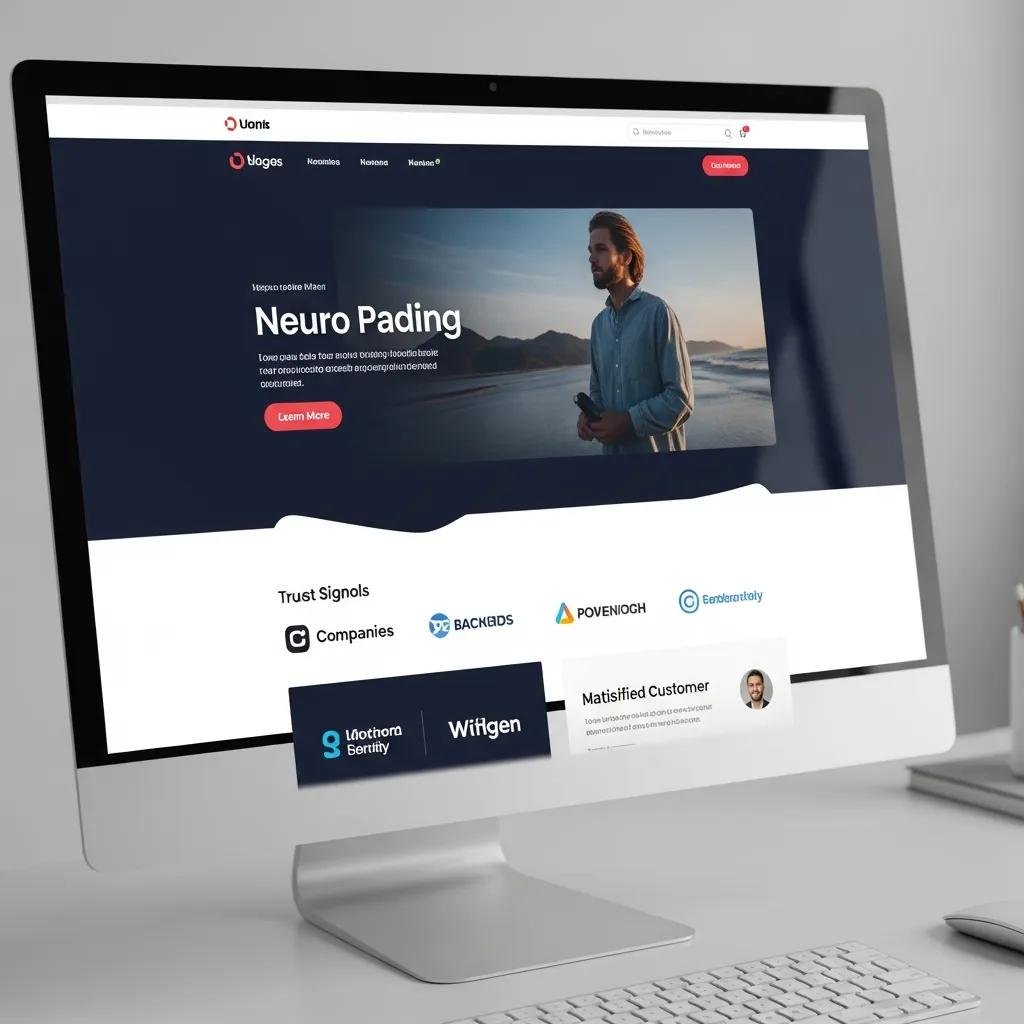
High-converting websites, expertly crafted through Bloom Design ME's Website Design and Graphic Design services, blend clarity, speed, trust, and persuasive messaging to guide users through the conversion funnel. Our design elements create visual hierarchy, prioritize the primary call-to-action, and reduce cognitive load, shortening decision time and reducing abandonment. Page speed and mobile-first UX are technical drivers of conversion: faster pages increase engagement and lower bounce rates, while mobile-optimized flows account for the majority of modern traffic in many verticals. Trust signals—such as clear value propositions, testimonials, and transparent pricing—reduce friction and support final-stage decisions, often enhanced by compelling Video Marketing and strong Reputation & Google Review Management.
- Clear Visual Hierarchy: Prominent headlines and predictable scanning patterns help users find the primary action quickly.
- Optimized CTA Placement: High-contrast, above-the-fold CTAs reduce friction and improve click-through rates.
- Fast Mobile Experience: Reducing page weight and simplifying forms increases mobile conversion and session duration.
These practices link directly to funnel stages and prepare readers for concrete UX-to-metric mappings in the next section.
Before examining element-level impacts, the following table compares common UX levers, their attributes, and expected conversion impact to guide designers and product owners.
How Does UX/UI Design Influence Conversion Funnel Optimization?
UX decisions have direct downstream effects at each stage of the conversion funnel, from awareness to action. Homepage and category pages must clearly communicate value and guide visitors toward relevant offers, while product or landing pages need persuasive copy, prioritized CTAs, and frictionless form or checkout flows to convert intent into action. Common friction points include long forms, inconsistent messaging between ads and landing pages, and slow load times; fixing these reduces drop-off at their respective funnel stages. Mapping UX elements to funnel metrics — for example, optimizing product page images to improve add-to-cart rate — creates targeted experiments with clear KPIs.
Design improvements should be prioritized by the funnel stage with the highest leakage and the most traffic to maximize the impact of limited resources. This mapping naturally moves into content-based tactics that reduce friction and strengthen the persuasive path to conversion.
What Content Optimization Techniques Increase Website Conversion?
Content changes, a core component of Bloom Design ME's Content service, are among the fastest, lowest-cost tests with measurable outcomes for conversion optimization. Our expertly crafted persuasive headlines and clear value propositions align expectations, short benefit-led bullet points reduce cognitive load, and concise microcopy next to form fields reduces form abandonment. Social proof—reviews, logos, and brief case snippets—build trust quickly, often supported by our Reputation & Google Review Management and compelling Video Marketing. Email copy and nurture content, managed through our Email Marketing service, should mirror landing page messaging to keep prospects moving through the funnel.
- Headlines & Value Propositions: Make the primary benefit obvious within two seconds.
- Microcopy & Form Simplification: Reduce fields and clarify purpose to decrease abandonment.
- Social Proof & Multimedia: Use testimonials and short videos to improve credibility and intent.
How Can SEO and Paid Ads Enhance Your CRO Strategy?
Acquisition channels and conversion optimization are tightly coupled: feeding high-quality, intent-matched traffic to optimized landing pages improves overall campaign ROI. Bloom Design ME's comprehensive SEO strategies provide sustained, qualified organic visitors and generate query data that informs page relevance and messaging hypotheses. Our profitable Paid Ads campaigns allow precise audience and message testing at scale across platforms like Google, Meta/Facebook, and Instagram. Coordinating on-page messaging between SEO landing pages and paid creative ensures consistent user expectations and higher conversion rates. Furthermore, our Outreach Campaigns and Content creation services amplify reach and engagement, while our Email Marketing nurtures leads. Using channel data to prioritize pages with strong organic traffic but low conversion creates efficient opportunities for high-impact tests.
These channel interactions produce practical opportunities for CRO teams to test content, creative, and funnels quickly and to scale winners across acquisition channels.
What Is the Synergy Between SEO and CRO?
Bloom Design ME's SEO and CRO services work together by matching searcher intent to landing page content and by using organic performance data to generate test ideas. Keyword-level intent can reveal what users expect on arrival, guiding headline and CTA experimentation on landing pages. Technical SEO improvements, such as reducing page load times and improving mobile responsiveness, also remove barriers to conversion and improve organic rankings simultaneously. Organic A/B testing of Content variations can demonstrate which messaging resonates best for target queries and then informs Paid Ads campaigns and Email Marketing sequences.
Leveraging search data to craft landing page hypotheses creates efficient experiments that often show clear lifts in both traffic quality and conversion rate when implemented correctly. This synergy leads into specific ways paid ads and email marketing support experimentation and lead-generation goals.
How Do Paid Ads and Email Marketing Support Lead Generation?
Bloom Design ME's Paid Ads services accelerate learning by directing controlled traffic to experimental variants and enabling rapid validation of creative and copy changes. Our ads can be segmented by intent and audience, allowing precise A/B tests of landing page messages with defined budgets and timelines. Our Email Marketing complements paid and organic channels by nurturing leads, testing subject lines and sequences that improve re-engagement, and increasing lifetime value through upsell and cross-sell flows. Furthermore, our AI Receptionist can seamlessly capture and qualify leads generated from these channels 24/7, ensuring no opportunity is missed. Attribution and measurement practices should be established to understand channel-level effects on conversions and to avoid misattributing gains.
- Paid for Speed: Use paid traffic to validate ideas quickly before scaling.
- Email for Nurture: Sequence content to increase lead qualification and eventual conversion.
- Coordinated Messaging: Ensure ad copy, landing pages, and emails create a cohesive experience that drives higher conversion rates.
What Role Do A/B Testing and Data Analytics Play in CRO Success?
A/B testing and data analytics are the engine of CRO because they validate which changes causally improve conversion metrics and which do not. Experiment design requires clear hypotheses, control and variant setups, audience definitions, and pre-specified primary metrics to avoid p-hacking. Analytics tools — event tracking, funnel analysis, heatmaps, and session recordings — provide both the quantitative backbone and qualitative context needed to generate hypotheses and interpret test outcomes. Proper statistical understanding ensures that decisions are driven by reliable evidence rather than random variation.
Below is a quick guide to experiment types and when to use them to help choose the right methodology for your optimization objectives.
How Is A/B Testing Used to Optimize Website Performance?
A/B testing isolates changes to determine their causal impact on conversion metrics by comparing a control (original) and one or more variants under the same conditions. Best practices include defining a clear hypothesis, selecting a single primary metric, calculating required sample size and test duration, and ensuring consistent traffic allocation. Tests should avoid mid-test changes and should define success criteria before the experiment begins; post-test analysis examines both primary and secondary metrics to detect unintended side effects. When a variant wins, it should be implemented site-wide and the learning documented for future tests.
Through such rigorous experimentation, companies can achieve remarkable improvements in their conversion rates and user experience.
A/B Testing for Enhanced Conversion Rates & UX
A/B testing, companies can improve the effectiveness of their marketing and user experience and, in doing so, can sometimes double or triple their conversion rates.
A/B testing: The most powerful way to turn clicks into customers, 2015
A checklist for valid A/B tests includes: a measurable hypothesis, sufficient traffic and duration, proper randomization, correct tracking, and an implementation plan for winners — ensuring experiments produce reliable, actionable results that feed continual conversion improvements.
How Can AI and Data Analysis Improve CRO Outcomes?
AI and advanced data analysis accelerate CRO by surfacing patterns, prioritizing high-impact tests, and enabling dynamic personalization at scale. Bloom Design ME leverages these capabilities, including our innovative AI Receptionist service, which provides a trained AI answering service handling inquiries, scheduling, and lead capture 24/7, ensuring no lead is ever missed. Machine learning can score variant performance, predict which changes will succeed based on historical data, and recommend priority tests that maximize expected uplift. AI-assisted tooling can also automate variant generation or personalize content in real time, but human oversight is essential to validate ethical considerations, avoid bias, and interpret model-driven suggestions. Combining AI insights with rigorous experiment design allows teams to scale optimization while maintaining statistical rigor. Bloom Design ME integrates AI-assisted testing and analytics capabilities to accelerate hypothesis prioritization and personalization at scale, and offers a Free Visibility Health Audit for teams that want an expert review of their testing and analytics setup. This comprehensive capability helps organizations move faster from insight to validated improvements while preserving data integrity.
How Can Florida Businesses Leverage Local CRO Strategies for Maximum ROI?
Florida businesses face unique traffic patterns and audience behaviors driven by high mobile usage, tourism seasonality, and regional competition, all of which influence conversion strategies. Bloom Design ME's comprehensive services are tailored to address these local nuances. Prioritization for small to mid-size businesses should focus on pages with consistent local intent, optimizing mobile speed and local messaging through expert Website Design and Content creation, and using micro-conversions to capture intent when traffic is limited. Our Reputation & Google Review Management is crucial for local trust, while Video Marketing can capture the attention of transient visitors. Seasonal events and tourism flows require flexible Paid Ads campaigns and landing pages that address transient visitors while also serving core local customers. Resource-conscious CRO tactics include focusing on high-traffic, high-impact pages and using qualitative research to inform low-cost experiments that yield measurable wins, all guided by a strategic Marketing Plan.
Local businesses in cities such as Orlando, Miami, and Tampa can benefit from tactics like geo-tailored messaging, simplified mobile booking flows, and tracking offline conversions from phone or in-person leads to better attribute digital efforts. These considerations naturally lead to specific local constraints and prioritized actions for small teams.
What Are the Unique CRO Challenges for Small to Mid-Size Florida Businesses?
Smaller Florida businesses often contend with limited traffic volumes, making statistically significant tests more difficult without longer durations or targeted traffic acquisition. Bloom Design ME addresses this by leveraging targeted Paid Ads and robust SEO to drive qualified traffic. Seasonal demand peaks require adaptive landing pages and promotional CTAs that convert transient visitors during short windows of opportunity, a task made easier with our agile Website Design and Content services. Mobile-first audiences demand lean pages and frictionless checkout or booking processes to capture visitors on the go, and our AI Receptionist can ensure 24/7 lead capture from these mobile interactions. Prioritization should therefore emphasize high-impact, low-effort changes: headline clarity, form reduction, and trust signals, often enhanced by Graphic Design and Video Marketing, that improve conversion rates quickly.
Practical quick wins include reducing form fields, adding clear local trust indicators, and running focused paid campaigns during peak seasons to increase testable traffic. These tactics bridge resource constraints while building momentum for longer-term experimentation.
Which Case Studies Demonstrate Bloom Design ME’s CRO Impact Locally?
Bloom Design ME has worked with Florida clients across small to mid-size businesses, foundations, and non-profits to improve lead conversion and campaign outcomes through a tailored CRO approach. In one local engagement, Bloom Design ME used discovery analytics and targeted UX improvements on high-traffic pages to streamline the lead funnel, resulting in measurable increases in qualified leads and an improved conversion posture. In another engagement focused on seasonal event-driven traffic, the team adjusted messaging and streamlined mobile booking flows to better capture transient visitors, aligning acquisition and landing experience for higher conversion.
These case snapshots reflect Bloom Design ME’s stated objective to improve conversion and help clients multiply their results 2-5x through a focused Visibility Boost Blueprint and a Free Visibility Health Audit. Our success stems from integrating a full suite of services, from Marketing Plan and Branding to Website Design, SEO, Paid Ads, Email Marketing, AI Receptionist, Content, Outreach Campaigns, Graphic Design, Reputation & Google Review Management, and Video Marketing. Businesses in Orlando, Miami, and Tampa are encouraged to request a consultation to review local CRO opportunities. These examples illustrate how localized tactical execution and cross-channel coordination, powered by our comprehensive toolkit, translate to meaningful business outcomes.